
The Absolute Magnetics Technology is a globally patented measurement principle that introduces a new dimension to magnetic position sensing. It opens new possibilities for applications where conventional principles reach their limits.
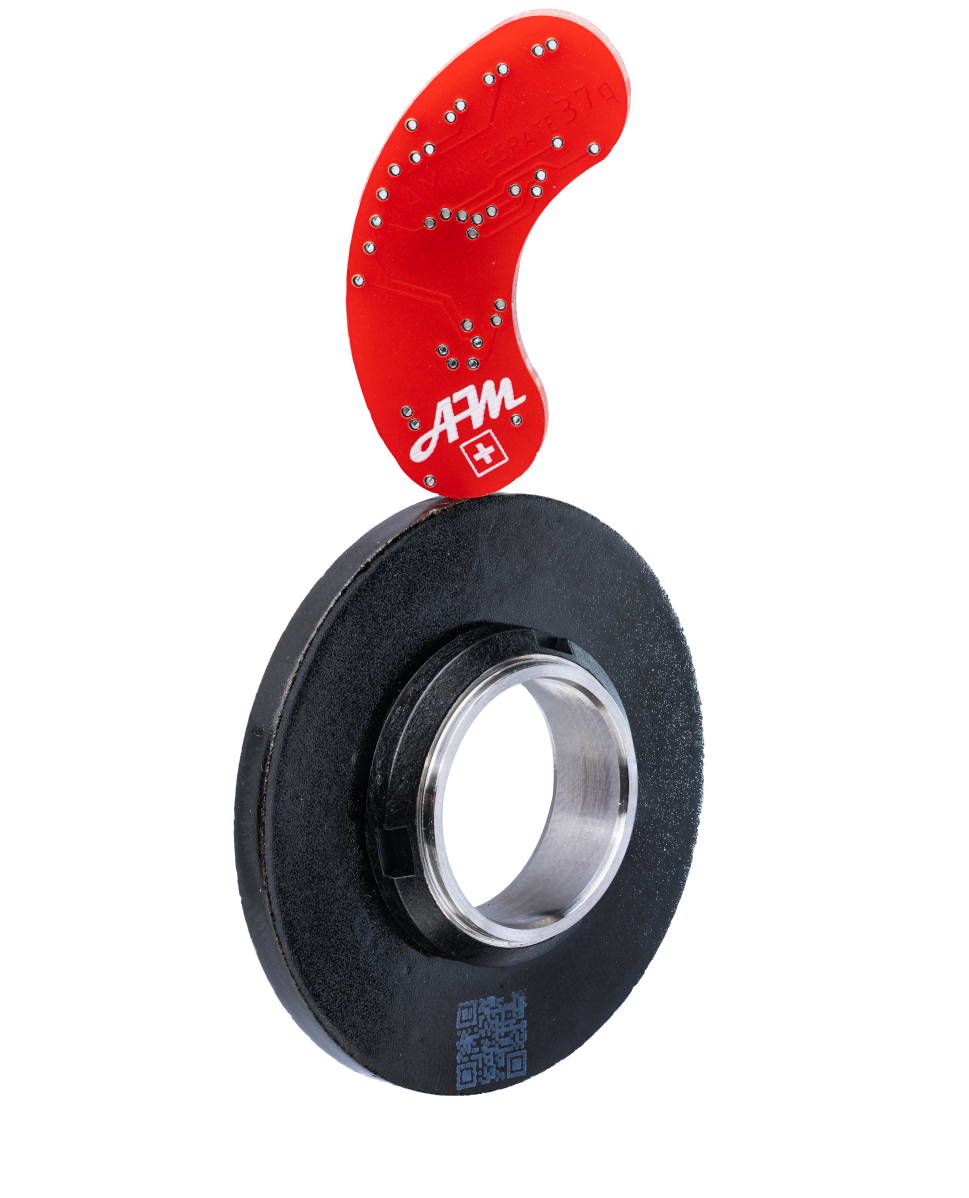
Our breakthrough innovation is built to deliver real, measurable results. In the performance tests videos below, you’ll see our technology in action — showing how it performs in real-world settings and providing evidence behind each of our performance claims.
Here you’ll find answers to the most common questions about Absolute Magnetics Technology:
A magnetic absolute encoder is a position sensor that uses a magnet and a magnetic sensor chip to measure the exact angular position of a rotating shaft. Unlike incremental encoders, it provides the absolute position immediately after power-up.
A magnetic absolute encoder uses a magnet attached to the rotating shaft and a sensor that detects the magnetic field. The sensor electronics calculate the absolute angular position based on the magnetic field pattern, enabling precise and contactless position measurement.
Absolute encoders provide the exact shaft position immediately after power-up, while incremental encoders only provide relative movement and require a reference or homing sequence. Absolute encoders improve safety, reduce startup time, and simplify system design.
Magnetic encoders are more robust than optical encoders because they are resistant to dust, oil, vibration, and temperature changes. They also tolerate larger air gaps and mechanical misalignment, making them ideal for motors, robotics, and harsh industrial environments.
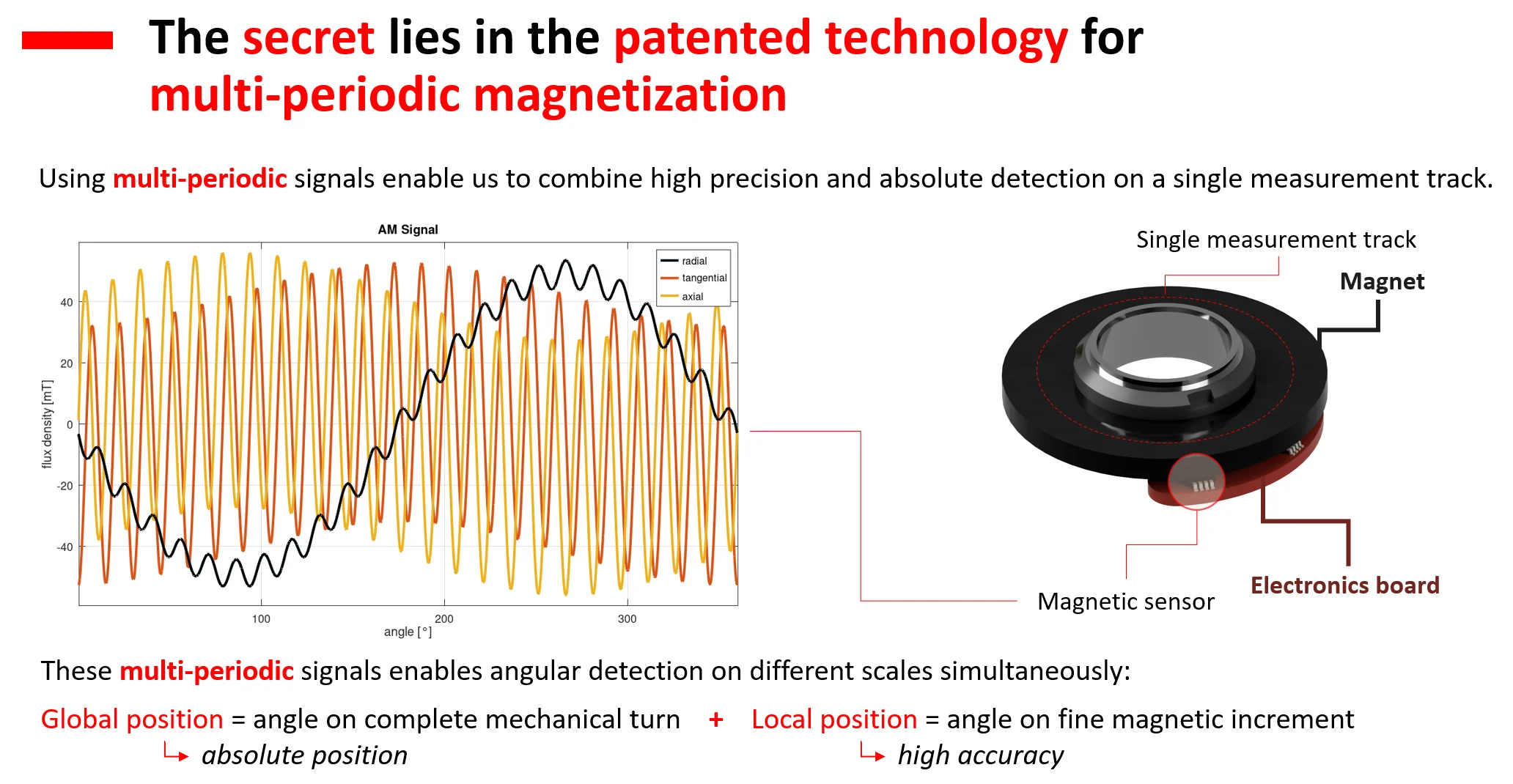
Conventional high-resolution magnetic absolute encoders often use the Vernier (Nonius) principle with two separate magnetic tracks that must be precisely aligned and kept from interfering with each other.
Absolute Magnetics Technology uses a single measurement track in which magnetization patterns are deliberately superposed. Instead of avoiding interference, the system uses it as an information-rich signal.
This results in a more robust design with reduced sensitivity to air-gap variations, eccentricity, and mechanical tolerances — without the complexity of multi-track systems.